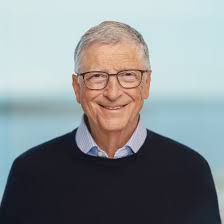
William Henry Gates III (born October 28, 1955) is an American software developer, entrepreneur, and philanthropist who co-founded Microsoft Corporation on April 4, 1975, with Paul Allen, initially to develop and sell BASIC interpreters for the Altair 8800 microcomputer, which evolved into a dominant force in personal computing software, including the Windows operating system and Office suite that powered the PC revolution. [1][2][3] As Microsoft's CEO from 1985 to 2000 and chairman until 2014, Gates oversaw its growth into the world's largest software company by market capitalization at its peak, amassing a personal fortune now estimated at $106.4 billion as of October 2025, primarily from Microsoft stock sales and diversified investments in assets like farmland and biotech. [4][1] In 2008, Gates transitioned from day-to-day involvement at Microsoft to focus on philanthropy through the Bill & Melinda Gates Foundation, formally launched in 2000, which has committed over $100 billion to initiatives targeting infectious diseases like malaria and polio via vaccine development and distribution, agricultural productivity in sub-Saharan Africa, and U.S. education reform, often partnering with governments and international bodies to scale interventions based on data-driven metrics of disease burden and economic return. [5][6][7] His tenure at Microsoft included a landmark U.S. antitrust case in the late 1990s, where the Department of Justice alleged monopolistic practices in bundling Internet Explorer with Windows to stifle competition, resulting in findings of monopoly maintenance but a settlement averting a company breakup, an episode Gates later reflected on as influencing strategic pivots away from dominance in emerging markets like mobile software. [8][9] Gates' post-Microsoft pursuits have also involved high-profile associations, including multiple meetings with Jeffrey Epstein after the latter's 2008 conviction for sex crimes, which Gates described as a mistake pursued in hopes of philanthropic opportunities but which contributed to strains in his marriage and public scrutiny over judgment in elite networks. [10][11]
Early Life and Education
Family Background and Childhood Influences
William Henry Gates III was born on October 28, 1955, in Seattle, Washington, to William H. Gates Sr., a prominent attorney and civic leader, and Mary Maxwell Gates, a businesswoman whose family included banking executives and who served on boards of civic organizations.[12][13] The couple raised Gates and his two sisters, Kristianne and Libby, in an upper-middle-class household that provided access to professional networks in law, business, and community leadership, environments that modeled achievement and public service.[13][14]Gates' parents instilled a strong emphasis on competition, intellectual rigor, and excellence from an early age, fostering habits like avid reading and strategic gameplay, including card games such as hearts that sharpened analytical skills within the family dynamic.[13][15] This competitive upbringing, rather than isolated genius, contributed to his drive, as family interactions prioritized outperforming one another in pursuits from academics to games, embedding a mindset geared toward high-stakes problem-solving.[13]Early environmental advantages enabled Gates to engage with emerging technologies; at age 13, he began self-teaching computer programming via a teletype terminal, an uncommon resource reflective of the socioeconomic opportunities afforded by his family's status and connections in Seattle's elite circles.[16][17] These foundational influences—familial reinforcement of ambition through competition and privileged exposure to tools of innovation—shaped the entrepreneurial orientation that defined his later path, underscoring the role of nurtured capabilities over innate traits alone.[13][18]
Education and Early Computing Exposure
Gates attended the private Lakeside School in Seattle starting in 1968 at age 13, an institution that provided rare access to computing resources among American high schools at the time.[19] The school's teletype terminal connected to a General Electric GE-635 mainframe enabled early programming experiments, initially subsidized through community fundraising efforts like garage sales organized by the Lakeside Mothers Club.[20] This institutional privilege, unavailable to most students due to the high cost and scarcity of such systems, allowed Gates to develop foundational skills in languages like BASIC and Fortran.[21] Alongside classmate Paul Allen, Gates co-founded the Lakeside Programmers Club in 1968, a group focused on exploiting computer time for projects, bug-finding gigs, and entrepreneurial schemes to offset usage fees.[21]In 1972, while still in high school, Gates and Allen launched Traf-O-Data, a venture with Paul Gilbert to process traffic-counting data from rubber hose sensors using an Intel 8008 microprocessor-based device.[22] The processor read punched paper tapes to generate reports for municipal clients, yielding about $20,000 in revenue over two years but netting minimal profits after hardware and contract losses.[23] This early enterprise honed Gates' abilities in hardware interfacing, data processing, and basic business operations, though it underscored the challenges of commercializing nascent technology without refined market fit.[24]Gates enrolled at Harvard University in 1973, pursuing coursework in mathematics and graduate-level computer science despite the absence of an undergraduate CS major until 1984.[25] He left after three semesters in 1975, prompted by Allen's discovery of the Altair 8800 microcomputer featured on the January 1975 cover of Popular Electronics, which signaled the advent of affordable personal computing and an opportunity to develop software for it.[26] This pivot from academia reflected Gates' prioritization of practical application over formal credentials, leveraging Harvard's elite network and resources as a launchpad for entrepreneurial pursuits.[27]
Microsoft Career
Founding and Initial Products
Microsoft was founded on April 4, 1975, in Albuquerque, New Mexico, as a partnership between Bill Gates, then 19 years old, and Paul Allen, then 22, initially named Micro-Soft.[28] The company's first product was an implementation of the BASIC programming language interpreter adapted for the Altair 8800 microcomputer, developed by Gates and Allen in response to the Altair's introduction by MITS earlier that year.[29] This Altair BASIC was demonstrated to MITS without a working prototype, leading to a licensing deal where Microsoft sold the rights to MITS for distribution with the Altair, marking the firm's initial revenue stream through software licensing rather than hardware development.[30]In 1979, Microsoft relocated its headquarters from Albuquerque to Bellevue, Washington, near Seattle, to leverage local talent and reduce dependence on the MITS proximity.[31] During this period, the company expanded by porting its BASIC interpreter to other platforms, including a standalone version for the Apple II computer, emphasizing software adaptability across hardware ecosystems over proprietary hardware ties. This strategy allowed Microsoft to license BASIC implementations to multiple manufacturers, building revenue through broad compatibility rather than vertical integration.A pivotal development occurred in 1980 when Microsoft acquired 86-DOS, an operating system originally developed by Tim Paterson at Seattle Computer Products, initially through a non-exclusive license for $25,000 and later purchasing full rights on July 27, 1981, for $50,000.[32] Renamed MS-DOS, it was licensed to IBM for use in their personal computer released in 1981, with Microsoft retaining the rights to sublicense it to other PC compatible manufacturers.[33] This non-exclusive arrangement enabled rapid market expansion as IBM PC clones proliferated, establishing MS-DOS as the dominant platform through licensing scalability rather than original invention.[33]
Growth Through Partnerships and Innovations
In November 1980, IBM contracted Microsoft to supply an operating system for its upcoming personal computer, prompting the company to license and adapt 86-DOS from Seattle Computer Products into MS-DOS (also known as PC-DOS for IBM).[34][35] Bill Gates negotiated the deal without exclusivity restrictions, retaining Microsoft's rights to license the OS to other manufacturers—a decision that enabled rapid dissemination to PC clones and amplified network effects through standardized compatibility.[36][37] In July 1981, Microsoft secured perpetual ownership by purchasing full rights to 86-DOS from its original developer, solidifying control over the foundational software for the emerging PC ecosystem.[35]This arrangement spurred Microsoft's growth as clone makers, including Compaq and Dell, licensed MS-DOS, creating a virtuous cycle where increasing hardware variety drove demand for compatible software, while developer investments in DOS-specific applications raised switching costs for users. By 1983, MS-DOS had become the de facto standard for Intel 8086-compatible PCs, outpacing rivals like CP/M due to its affordability and adaptability.[38] The absence of IBM-mandated exclusivity, combined with Gates' foresight in retaining licensing freedom, positioned Microsoft to capture royalties from millions of units sold independently of IBM hardware.[39]Microsoft advanced toward graphical interfaces with Windows 1.0, released on November 20, 1985, as an MS-DOS extension featuring tiled windows, icons, and mouse support to challenge Apple's Macintosh GUI dominance.[40] Iterative releases evolved the platform, with Windows 95—launched August 24, 1995—introducing preemptive multitasking, a Start menu, and deep integration of Internet Explorer for web browsing, which bundled the browser to leverage OS control for internet access.[41] These innovations entrenched Windows as the preferred GUI, as compatibility with vast DOS software libraries and hardware standards created barriers to alternatives like OS/2.Parallel to OS expansion, Microsoft bundled productivity tools into the Office suite, first released August 1, 1989, for Macintosh with Word, Excel, and PowerPoint, emphasizing integrated file formats for seamless workflows.[42] The Windows version followed in 1990, with subsequent editions reinforcing lock-in through features like Visual Basic for Applications, which standardized automation across apps and deterred migration to competitors.[43] By the mid-1990s, Office captured dominant market positions in word processing and spreadsheets, as bundling with Windows amplified adoption via pre-installation and compatibility synergies.These partnerships and product strategies propelled Microsoft to over 90% share of the PC operating system market by the late 1990s, where control of OS standards generated indirect network effects: developers prioritized Windows-compatible code, software abundance increased platform stickiness, and high entry barriers stifled rivals through economies of scale in compatibility testing and updates.[44][45] Empirical data from the era, including U.S. Department of Justice analyses, confirmed that such dominance stemmed from early licensing decisions rather than mere innovation, as clone proliferation locked in the ecosystem.[46]
Leadership and Internal Practices
Gates' management at Microsoft emphasized meritocracy and relentless performance standards, prioritizing the recruitment of highly intelligent and energetic individuals to sustain competitive advantage. He advocated hiring "super energetic" candidates committed to advancing personal computing accessibility, regardless of age, fostering a culture where intellectual rigor and innovation were rewarded.[47] This approach, described as a hallmark of his style, aimed to build teams capable of executing visionary strategies through individual excellence rather than hierarchical deference.[48]Central to internal practices was the stack ranking system, a forced performance distribution that evaluated employees relative to peers, categorizing them into tiers with predetermined quotas for top performers, average contributors, and those deemed underperformers. Implemented during Microsoft's growth phase under Gates' oversight, it incentivized individual output but often fostered secrecy, office politics, and reduced collaboration, as employees prioritized personal rankings over team goals.[49][50] Gates personally contributed to early performance appraisal methods, tying compensation to numerical ratings that reinforced high standards, though the system's zero-sum nature later drew criticism for eroding morale.[51]Gates maintained hands-on involvement in his initial years, coding products and scrutinizing technical details in high-pressure meetings characterized by confrontational debates and demanding expectations. He described himself as driving employees as intensely as he drove himself, likening the environment to a competitive sports dynamic that cultivated loyalty among high achievers but contributed to elevated stress and turnover.[52][53] Over time, his role shifted toward strategic oversight, yet the workaholic culture persisted, with reports of micromanagement and an autocratic bent prioritizing rapid decision-making in a fast-evolving industry.[54]These practices propelled Microsoft to become the world's largest software company, achieving a market capitalization exceeding $600 billion by 1999 through scaled operations and product dominance.[55] Empirical outcomes included sustained revenue growth and innovation in operating systems and applications, validating the merit-driven incentives despite the abrasive elements that predated later cultural critiques. However, the high-stress dynamics reportedly increased employee attrition, underscoring trade-offs between short-term results and long-term retention.[56][57]
Antitrust Battles and Outcomes
The United States Department of Justice (DOJ), joined by 20 states, filed an antitrust lawsuit against Microsoft Corporation on May 18, 1998, under Sections 1 and 2 of the Sherman Antitrust Act.[58] The complaint alleged that Microsoft maintained an unlawful monopoly in the market for Intel-compatible personal computer operating systems, with over 90% market share for Windows, by engaging in exclusionary practices such as bundling Internet Explorer (IE) with Windows to foreclose competition from Netscape Navigator and other middleware that could undermine Windows dominance.[58] These actions were claimed to stifle innovation and harm consumers by protecting Microsoft's OS monopoly rather than competing on merits.[8]Bill Gates, as Microsoft's CEO, underwent a videotaped deposition in August 1998, which became infamous for its perceived evasiveness.[59] Gates repeatedly responded "I don't recall" or denied recollection of key emails and conversations regarding competitive strategies against Netscape and Java, frustrating DOJ attorneys and later drawing judicial criticism during the trial for appearing unresponsive and pedantic.[60][61] The deposition footage, played in court, highlighted Gates' defensive posture in defending bundling as a pro-consumer integration rather than anticompetitive tying.[61]In findings issued April 3, 2000, U.S. District Judge Thomas Penfield Jackson ruled Microsoft liable for monopoly maintenance and unlawful tying of IE to Windows, concluding the company had stifled browser competition to preserve its OS platform power.[62] Jackson proposed remedies in June 2000, including splitting Microsoft into two separate companies—one for operating systems and one for applications—to restore competition.[62] On appeal, the U.S. Court of Appeals for the D.C. Circuit in June 2001 upheld liability for some violations but reversed the breakup order, citing Jackson's judicial misconduct and excessive remedies, remanding for a new judge.[63]The case concluded with a settlement on November 1, 2001, between the DOJ, nine settling states, and Microsoft, avoiding a breakup.[64] Key terms required Microsoft to share APIs and technical documentation with competitors for 30 months (extendable), permit OEMs to remove IE access points and install rival software without retaliation, and establish an internal antitrust compliance committee.[64] Nine non-settling states pursued stricter terms but largely failed in subsequent rulings. Long-term, the settlement curbed some OS-centric practices but did not dismantle Microsoft's platform control, which some economists argue fosters innovation through network effects and integration incentives.[65] Microsoft's dominance waned in emerging mobile and web sectors due to technological shifts favoring Apple's iOS and Google's Android, rather than solely antitrust enforcement, validating OS bundling's role in sustaining competitive platform ecosystems.[66] Critics, including certain economic analyses, contend the intervention overly penalized successful innovation without clear consumer harm evidence, potentially deterring future tech investments.[67]
Transition and Post-Microsoft Ventures
Stepping Down from Microsoft Roles
In January 2000, Bill Gates stepped down as chief executive officer of Microsoft, transitioning to the role of chief software architect while retaining his position as chairman of the board; Steve Ballmer, a longtime executive, assumed the CEO role to handle day-to-day operations.[68] This shift allowed Gates to focus more on product vision and technical strategy amid ongoing antitrust scrutiny and the need for professional management of the company's growing scale.[69]Gates announced in June 2006 that he would relinquish his full-time duties at Microsoft by mid-2008, citing a desire to dedicate increased attention to global health and education initiatives through the Bill & Melinda Gates Foundation; he completed this transition on June 27, 2008, ending his role as chief software architect but continuing as chairman and board member.[70] During this period, Gates advised on key technologies while gradually reducing his operational involvement, enabling him to apply his accumulated wealth—then estimated at over $50 billion—toward philanthropic priorities without fully severing ties to the company he co-founded.[69]In February 2014, following Satya Nadella's appointment as CEO, Gates stepped down as chairman but remained on the board as a technology advisor, preserving a degree of influence over strategic direction; he participated in select board meetings and provided input on innovation areas like artificial intelligence.[70] Gates' board tenure ended on March 13, 2020, when he resigned to concentrate further on philanthropic efforts, though subsequent reporting revealed the decision followed a 2019 board investigation into an alleged romantic relationship with a female Microsoft employee from around 2000, which the board deemed raised concerns about workplace conduct.[71][72][73]Under Ballmer's leadership from 2000 to 2014, Microsoft encountered significant setbacks in mobile computing, including the failure of Windows Mobile and Windows Phone platforms to gain substantial market share against Apple's iOS and Google's Android; the company wrote off $7.6 billion on its 2014 Nokia acquisition, highlighting missteps in hardware and ecosystem strategy that Gates later described as his "greatest mistake ever."[74] Nadella's tenure from 2014 onward marked a pivot to cloud computing, with Azure emerging as a leading platform and contributing to a roughly tenfold increase in Microsoft's stock price by 2024, underscoring a recovery from the post-Gates stagnation in consumer devices.[75][76]
Private Investments and Business Activities
Cascade Investment LLC, Gates' private investment vehicle established in 1995, manages the bulk of his personal fortune through a concentrated portfolio favoring undervalued, cash-generating businesses over high-growth tech speculation. As of the second quarter of 2025, Cascade's disclosed holdings totaled approximately $47.8 billion across 25 stocks, with roughly 79% allocated to just four positions: Microsoft (27%), Berkshire Hathaway (25%), and stakes in waste management firms like Republic Services, reflecting a value-oriented strategy akin to Berkshire Hathaway's long-term compounding approach.[77][78][79] Cascade maintains significant ownership in Republic Services, holding a 34% stake as of September 2025, capitalizing on steady demand for waste handling amid population growth and regulatory shifts.[79] Historically, it amassed a major position in Canadian National Railway, peaking at over 13% ownership before reductions via sales exceeding $940 million in 2022 and subsequent transfers, leaving a diminished but still notable stake focused on logistics efficiency gains.[80][81]In parallel, Gates has directed private capital toward energy infrastructure via targeted ventures. He co-founded TerraPower in 2006 to advance nuclear fission designs, culminating in the Natrium reactor—a 345-megawatt sodium-cooled fast reactor integrated with molten salt storage for flexible power output up to 500 megawatts. TerraPower broke ground on a Wyoming demonstration plant in June 2024, supported by a $650 million funding round in June 2025, positioning it as a potential deployer of cost-competitive baseload power independent of intermittent renewables.[82][83][84]Gates launched Breakthrough Energy Ventures in 2015 as a $2 billion-plus fund, co-investing with partners in over 100 startups developing scalable clean technologies, including next-generation nuclear, fusion prototypes, and industrial decarbonization tools like advanced batteries and hydrogen systems.[85][86] The fund's third installment raised $839 million by August 2024, targeting breakthroughs that could abate gigatons of emissions through market-viable engineering rather than subsidies.[87] After disbanding its internal policy team in March 2025 to streamline operations, Breakthrough alumni formed the Clean Economy Project in October 2025, an independent advocacy entity pushing regulatory reforms to deploy cleantech at grid-scale while prioritizing affordability and reliability over mandates.[88][89][90]
Philanthropic Efforts
Creation and Evolution of the Gates Foundation
The Bill & Melinda Gates Foundation was formally launched in 2000, consolidating prior family philanthropic entities including the William H. Gates Foundation established in 1994.[6] Bill Gates provided an initial endowment of approximately $20 billion, primarily from proceeds of his Microsoft shares, establishing it as one of the largest private foundations globally with a mandate for data-informed grantmaking to achieve verifiable progress in health, education, and economic mobility.[91] This structure positioned the foundation as a private entity capable of deploying resources at scales rivaling or exceeding many national governments' targeted aid budgets, unencumbered by bureaucratic or electoral constraints.[92]Initially co-chaired by Bill and Melinda Gates, the foundation's governance evolved amid their 2021 divorce, which prompted an expansion of the board of trustees to five members—including Strive Masiyiwa and Tom Tierney—for enhanced oversight of strategic decisions.[93] Melinda French Gates resigned as co-chair in May 2024, receiving a $12.5 billion allocation for her separate philanthropic work, after which Bill Gates assumed sole chairmanship while committing to sustain the foundation's trajectory.[94] By mid-2025, the endowment stood at $86 billion, reflecting compounded investment returns and additional pledges from donors like Warren Buffett, who contributed $43.3 billion since 2006.[92]The foundation has forged key public-private partnerships to amplify impact, serving as a founding supporter of Gavi, the Vaccine Alliance, with an initial $750 million commitment in 2000 and a renewed $1.6 billion pledge over 2023–2027 announced in June 2025.[95][96] It has similarly partnered with the Global Fund to Fight AIDS, Tuberculosis and Malaria since the latter's inception, providing nearly $5 billion cumulatively by September 2025, including a $912 million pledge unveiled at the foundation's Goalkeepers event that month to bolster child health interventions.[97][98] These alliances underscore the foundation's role in leveraging private capital to catalyze multilateral efforts, having disbursed over $100 billion in grants across its first 25 years through 2025.[99]
Key Initiatives in Health, Education, and Poverty
The Bill & Melinda Gates Foundation has directed significant resources toward global health programs, particularly in infectious disease control. In partnership with the Global Polio Eradication Initiative (GPEI), launched in 1988 when polio paralyzed approximately 1,000 children daily across more than 125 countries, the foundation has committed over $6.2 billion, funding vaccination campaigns and novel oral polio vaccine type 2 (nOPV2) development to interrupt transmission.[100][101][102] For malaria, the foundation supports the scale-up of interventions such as insecticide-treated bed nets and research into new tools like genetically modified mosquitoes, contributing to a reduced global disease burden since 2000 through increased funding and political commitments.[103][104]During the COVID-19 pandemic, the foundation allocated funds for vaccine, diagnostic, and therapeutic development, including a $150 million pledge on April 15, 2020, to advance these areas and expand manufacturing capacity, followed by $70 million announced on November 12, 2020, for safe, affordable vaccine distribution in low-income countries.[105][106] The foundation also backs broader efforts via the Global Fund to Fight AIDS, Tuberculosis, and Malaria, which attributes over 70 million lives saved since 2002 to its programs, with death rates from HIV, TB, and malaria declining 63% in supported countries.[107][108]In education, the foundation promoted the Common Core State Standards to establish consistent, rigorous K-12 benchmarks focused on math and literacy proficiency for college and career readiness. It provided grants, including nearly $1 million to Learning Forward in 2012 for state adoption and teacher training, and collaborated on resources like the 2008 policy brief "Fewer, Clearer, Higher" advocating for these standards to replace varied state curricula.[109][110][111]To combat poverty via agricultural productivity, the foundation co-established the Alliance for a Green Revolution in Africa (AGRA) in 2006 with the Rockefeller Foundation, targeting smallholder farmers through improved seed systems, fertilizer access, and market linkages. The initiative's Program for Africa's Seed Systems (PASS), launched that year, aimed to develop and distribute high-yield, locally adapted crop varieties to boost food security and incomes across sub-Saharan Africa.[112][113][114]
Quantified Impacts and Empirical Evaluations
The Bill & Melinda Gates Foundation has disbursed approximately $83.3 billion in grants since its inception in 1994 through the end of 2024, with annual expenditures reaching $8 billion in that year alone, enabling targeted interventions that have yielded measurable outcomes in global health metrics.[115][116] In health initiatives, foundation-supported vaccine programs, particularly through partnerships like GAVI, have contributed to substantial reductions in child mortality; global immunization efforts, bolstered by such funding, averted an estimated 154 million deaths over the past 50 years, with nearly 94 million from measles vaccines alone.[117] Child mortality rates have declined by more than half since 2000, a trend accelerated by expanded access to vaccines against diseases like measles and polio, though causal attribution remains complex due to concurrent factors such as improved sanitation and economic growth in recipient countries.[118][119]Independent analyses, including those from the Copenhagen Consensus Center, have ranked foundation-aligned interventions—such as vaccine distribution and micronutrient fortification—among the highest-return investments for development aid, with benefit-cost ratios often exceeding 50:1 based on lives saved per dollar spent.[120][121] These evaluations prioritize empirical cost-effectiveness over broader aid models, highlighting the foundation's focus on scalable, evidence-based tools that outperform traditional government disbursements in efficiency, as the latter often suffer from higher administrative overhead and less rigorous outcome tracking.[122]In education and poverty alleviation, results have been more varied. U.S.-focused efforts, including a $575 million teacher evaluation initiative, showed no statistically significant improvements in student test scores or achievement gaps after several years, despite identifying effective teaching measures like classroom observations.[123] Similarly, the Alliance for a Green Revolution in Africa (AGRA), funded with over $1 billion from the foundation, achieved modest yield increases in staple crops like maize but failed to translate these into sustained farmer income growth or reduced hunger; independent reviews found stagnating incomes and persistent poverty levels in target regions, with critiques attributing this to overemphasis on input-intensive farming amid market and climate constraints.[124][125] These outcomes underscore challenges in attributing long-term causal impacts in multifaceted domains like agriculture, where external variables such as commodity prices and policy environments complicate isolated evaluations.[126]
Criticisms of Approach and Long-Term Effects
Critics of the Bill & Melinda Gates Foundation's philanthropic model argue that its top-down, technocratic approach fosters dependency on external aid rather than building sustainable local capacities, as evidenced by the foundation's emphasis on centralized interventions that often bypass grassroots institutions.[127] Economist Dambisa Moyo, in broader critiques of aid echoed in analyses of Gates-funded programs, contends that such large-scale philanthropy disincentivizes self-reliance by creating moral hazard, where recipient governments prioritize donor compliance over internal reforms.[128] This perspective aligns with first-principles reasoning on incentives: when aid flows condition funding on specific metrics like vaccination rates, it can crowd out investments in broader economic freedoms, such as property rights or trade liberalization, which historically correlate with poverty reduction in empirical studies from East Asia's growth miracles.The foundation's heavy reliance on technological solutions, such as genetically modified crops or digital health tools, has drawn fire for overlooking cultural and institutional barriers in developing contexts, potentially exacerbating inefficiencies.[129] For instance, initiatives promoting high-tech agriculture in Africa have been faulted for ignoring local farming knowledge and soil variability, leading to adoption failures documented in field evaluations where smallholders revert to traditional methods due to mismatched inputs.[130] Such "solutionist" strategies, as termed by observers, prioritize scalable fixes over adaptive, context-specific governance, reflecting a bias toward metrics quantifiable by donors rather than holistic development.[131]Through substantial grants, the Gates Foundation exerts significant sway over international bodies like the World Health Organization (WHO), funding approximately 10% of its budget and thereby shaping priorities toward vaccine-centric programs at the expense of primary care or sanitation.[132] Former WHO malaria chief Arata Kochi publicly criticized this dynamic in 2008, warning that the foundation's dominance stifles debate and creates a "cartel" effect, where dissenting views on allocation—such as favoring neglected tropical diseases over high-profile ones—are marginalized.[131] This influence, while defended by foundation executives as necessary for focus, raises concerns about accountability, given the private nature of funding decisions unmoored from democratic oversight.[133]Economically, foundation subsidies for vaccines and drugs have been accused of distorting markets by reinforcing intellectual property monopolies, which inflate costs and hinder generic production in low-income countries.[134] During the COVID-19 pandemic, Gates' opposition to waiving Trade-Related Aspects of Intellectual Property Rights (TRIPS) under WTO rules was cited by development advocates as prioritizing pharmaceutical profits over equitable access, with modeling showing that patent protections delayed dose availability by months, costing millions of lives per Oxford University estimates.[135] In contrast to free-market dynamics where competition drives down prices—as seen in India's generic drug industry—these interventions, blending philanthropy with patent advocacy, arguably perpetuate scarcity, undermining long-term affordability and local manufacturing incentives.Over the long term, such approaches risk entrenching poverty cycles by misaligning incentives toward perpetual grant-seeking rather than productive entrepreneurship, as aid volumes exceeding $100 billion since 2000 have correlated with stagnant per-capita growth in heavily dependent regions per World Bank data.[136] Causal analysis suggests that when philanthropy substitutes for market signals, it weakens institutional evolution: recipients adapt to donor priorities, fostering bureaucratic bloat over innovation, much like historical foreign aid failures in sub-Saharan Africa where dependency ratios exceeded 10% of GDP without corresponding productivity gains.[137] Empirical evaluations, including those from independent reviewers, indicate that while short-term health metrics improve, broader welfare gains lag, attributable to neglected factors like rule-of-law reforms that underpin sustained escape from poverty traps.[138] These critiques, often from economists skeptical of centralized planning, underscore a core tension: philanthropy excels at acute interventions but falters in fostering the incentive structures essential for enduring prosperity.
2025 Commitments and Planned Wind-Down
In May 2025, Bill Gates announced plans to donate virtually all of his remaining wealth—estimated at approximately $200 billion—through the Bill & Melinda Gates Foundation over the subsequent 20 years, with the foundation set to fully wind down and close its operations on December 31, 2045.[139][140] This accelerated timeline doubles the foundation's anticipated spending compared to prior projections, drawing from its existing $77 billion endowment and Gates's personal contributions, primarily targeting global health, education, and poverty alleviation initiatives.[141][142]Gates articulated the strategy as a deliberate rejection of indefinite endowments, emphasizing time-limited operations to sustain focus on measurable outcomes like lives saved and improved, rather than risking institutional mission drift over generations.[99] He contrasted this approach with perpetual foundations such as the Ford Foundation, which, after decades, shifted from its original anti-communist labor focus to broader progressive causes, including funding groups involved in U.S. domestic unrest in the 1960s and later ideological priorities disconnected from founders' intent.[143] Gates argued that a fixed endpoint enforces accountability and prevents bureaucratic inertia, aligning philanthropy with urgent, evidence-based interventions in areas like vaccine distribution and disease eradication, where empirical progress can be tracked within a defined horizon.[144][145]Complementing this pivot, the Gates Foundation in late June 2025 ceased granting funds to donor-advised funds and nonprofits managed by Arabella Advisors, a consulting firm that has facilitated over $1 billion in anonymous contributions to progressive advocacy groups, many aligned with Democratic Party priorities and criticized for opaque "dark money" practices.[146][147] This decision, detailed in an internal memo, reflects a broader recalibration away from intermediaries entangled in partisan networks, prioritizing direct, apolitical impact in core mission areas amid scrutiny over Arabella's role in funding election-related efforts and policy influence campaigns.[148][149] Analysts project the cutoff could deprive Arabella-linked entities of significant future revenue, underscoring Gates's emphasis on streamlined, outcome-oriented giving as the foundation approaches its sunset.[150]
Technological and Economic Views
Perspectives on AI, Automation, and Job Markets
Bill Gates has consistently expressed optimism about technological advancements driving economic productivity, viewing automation and AI as forces that ultimately expand human opportunities rather than merely displacing jobs. In the mid-1990s, he described the internet as an impending "tidal wave" that would create new efficiencies and markets, shifting Microsoft’s strategy toward embracing digital connectivity despite initial skepticism within the company.[151] This early perspective framed tech disruption as a net positive, with historical precedents like the internet fostering job growth in unforeseen sectors through adaptation rather than resistance to change.Gates has forecasted that AI will dramatically reduce the human workload, predicting in March 2025 that within a decade—potentially by 2035—advances could enable a two-day workweek as AI handles most routine and cognitive tasks, freeing individuals for higher-value activities.[152] He reiterated in the same period that humans may no longer be needed "for most things," with AI potentially replacing roles in fields like medicine and education, though he emphasized the need for societal adjustments to distribute productivity gains.[153] By August 2025, Gates noted AI's pace surprised even experts, warning it could outpace worker adaptation and automate entire sectors, yet he maintained that such changes would enhance overall efficiency if managed through retraining programs.[154]To facilitate a smoother transition from automation, Gates proposed in a February 2017 interview taxing robots and automated systems at rates comparable to human labor, arguing this would slow displacement while generating revenue for retraining displaced workers in areas like elder care and education.[155] He contended that without such measures, rapid automation erodes the income tax base, but paired with investment in human capital, it yields long-term benefits by redirecting labor toward roles requiring empathy and oversight that AI cannot fully replicate.[156] Gates has stressed that AI risks, including job obsolescence, are real but manageable through proactive policies focused on upskilling, rather than halting innovation.[157]
Energy, Climate Innovation, and Market Solutions
In 2015, Bill Gates founded Breakthrough Energy, an initiative aimed at accelerating the development of clean energy technologies through private investment and innovation to address climate change.[86] The organization includes Breakthrough Energy Ventures (BEV), a venture capital fund that has raised over $2 billion across multiple funds, including $839 million for its third fund in 2024, to support startups developing scalable solutions for reducing greenhouse gas emissions.[87] BEV's portfolio encompasses more than 50 companies as of 2024, with investments targeting areas such as carbon capture and storage, advanced nuclear reactors, and next-generation energy storage to enable reliable, low-carbon power.[85]Gates has emphasized that climate change poses a genuine risk but can be mitigated through technological breakthroughs rather than economic contraction or reliance on current intermittent renewables alone.[158] He advocates for increased private-sector research and development in energy, arguing that advanced nuclear power provides a dispatchable, carbon-free baseload source available 24 hours a day, unlike solar and wind, which suffer from intermittency requiring costly backups or storage.[159][160] Gates has personally invested in TerraPower, a company developing sodium-cooled fast reactors, with construction beginning on a demonstration plant in Wyoming in 2024 to deliver emissions-free electricity at scale.[161]Gates critiques heavy subsidization of solar and wind, noting their inability to fully replace fossil fuels without addressing intermittency, and calls for redirecting resources toward unproven but high-potential innovations like carbon capture that can achieve deeper decarbonization across sectors beyond electricity.[162][158] He favors market-driven progress over regulatory mandates, highlighting that government policies should prioritize deregulation to speed permitting and deployment of clean technologies, enabling cost reductions through competition rather than protected markets.[163]In 2025, following Breakthrough Energy's disbandment of its in-house policy team in March, former staff launched the Clean Economy Project to advocate for streamlined regulations and faster project approvals, aiming to make clean energy the cheapest and most reliable option by reducing barriers to innovation and construction.[89][164] This effort aligns with Gates' long-standing push for policy reforms that prioritize empirical progress in breakthrough technologies over incremental subsidies for established renewables.[165]
Political Stances and Influence
Positions on Regulation, Patents, and Industry Policy
In the early days of Microsoft, Gates expressed concerns about intellectual property mechanisms that could stifle small innovators, warning in 1991 that large companies might patent obvious ideas to extract profits from competitors, potentially harming the nascent software industry.[166] His 1976 open letter to hobbyists focused on combating unauthorized software copying rather than patents per se, arguing that free distribution undermined incentives for professional development of quality code.[167] Over time, as Microsoft grew, Gates shifted toward embracing patents for defensive purposes; by 2004, he announced plans to file 3,000 patents annually to protect innovations amid a system he criticized for granting overly broad 20-year protections that did little to spur ongoing progress.[168][169]During the U.S. Department of Justice's antitrust case against Microsoft in the late 1990s and early 2000s, Gates defended the company's practices as pro-consumer, likening government intervention to dictating hardware bundling and asserting that integrating software features like Internet Explorer benefited users without monopolistic harm.[170] He viewed the scrutiny as misguided, prioritizing innovation over regulatory constraints, though in retrospect, Gates admitted naivety in navigating such probes, noting in 2020 that rules evolve and excessive government overreach could deter investment.[171] Empirical outcomes from the case, including mandated separations and settlements, arguably fostered greater competition in browsers and software ecosystems, challenging pure free-market defenses by demonstrating how targeted regulation could address externalities like market lock-in without fully dismantling dominant firms.[172]Post-Microsoft, Gates advocated selective regulatory measures to correct market failures, such as higher estate taxes on the ultra-wealthy to recycle economic opportunities and mitigate dynastic inequality, aligning with his view that capitalism thrives under progressive fiscal policies.[173] He maintained strong support for intellectual property in high-R&D sectors like pharmaceuticals, arguing that patents provide essential incentives for innovation, as evidenced by his opposition to broad waivers during the COVID-19 pandemic, emphasizing that without IP protections, firms would underinvest in novel vaccines and treatments.[174] This stance reflects a pragmatic balance: regulation for externalities like wealth concentration or public goods under-provision, tempered by recognition that overregulation—such as aggressive antitrust or patent erosion—risks dampening the private-sector dynamism that drove Microsoft's breakthroughs and broader technological advances.[175] Gates has cautioned that governments often lag in regulating emerging tech like AI, where hasty interventions could hinder progress more than they help.[176]
Global Health Policies, Vaccines, and Pandemic Responses
The Bill & Melinda Gates Foundation has prioritized vaccine development and distribution as central to its global health strategy, funding programs that have contributed to substantial reductions in child mortality from preventable diseases. Through support for Gavi, the Vaccine Alliance, the foundation has helped deliver vaccines to low-income countries, with global immunization efforts—bolstered by such initiatives—estimated to have saved at least 154 million lives over the past 50 years, including nearly 94 million from measles vaccines alone.[177][95] Empirical evaluations of rotavirus vaccines, for instance, show efficacy ranging from 18.6% to 94.3% across countries, demonstrating variable but often high effectiveness in preventing severe gastroenteritis, particularly in supported rollout programs.[178]Gates has advocated strongly for intellectual property protections in vaccine development, arguing that patents are essential to incentivize research and development investment. In 2020-2021, he opposed a full waiver of COVID-19 vaccine patents under the World Trade Organization's TRIPS agreement, contending that such measures would deter future innovation by reducing returns for pharmaceutical companies, despite calls from some governments and activists for waivers to accelerate production in developing nations.[179][180][181] The Gates Foundation played a key role in COVAX, pledging over $300 million to facilitate equitable vaccine access, aiming to distribute doses based on global need rather than wealth, though critics noted delays and shortfalls in delivery to lower-income countries.[182][183][184]During the COVID-19 pandemic, Gates emphasized the urgency of rapid vaccine development and widespread deployment, warning that hesitancy could prolong the crisis and enable variants to emerge.[185][186] He criticized uneven distribution approaches as dysfunctional, advocating for international cooperation to prioritize high-risk populations globally.[187] In 2025, Gates warned that rising vaccine skepticism in the United States, amplified by figures like Robert F. Kennedy Jr., risks undermining global measles eradication efforts by exporting doubt to developing countries where immunization rates are already fragile, potentially leading to resurgences of the disease.[188][189]Critics, including some public health scholars, have raised concerns about the foundation's outsized influence on the World Health Organization (WHO), where it has become a leading donor, potentially allowing private philanthropic priorities to shape international agendas and bypass national sovereignty in health policy decisions.[190][132][131] This influence has been linked to a focus on high-tech vaccines over broader systemic improvements like sanitation, with some analyses arguing that heavy emphasis on new vaccines may exacerbate inequities in resource-poor settings by diverting funds from basic interventions.[191] While vaccine return-on-investment studies show benefits like $26.1 saved per dollar invested against certain pathogens, debates persist on whether patent-driven models genuinely accelerate access or entrench monopolies that limit generic production during emergencies.[192][180] These critiques often emanate from sources skeptical of billionaire-led philanthropy, highlighting tensions between innovation incentives and immediate global equity needs.[130]
Critiques of Cryptocurrencies and Alternative Systems
Bill Gates has repeatedly criticized cryptocurrencies for their lack of intrinsic value and reliance on speculation rather than productive utility. In May 2018, he described Bitcoin and initial coin offerings (ICOs) as "some of the crazier, speculative things" he had encountered, stating he would short Bitcoin if possible due to its non-productive nature as an asset class.[193] Gates has argued that cryptocurrencies operate on the "greater fool theory," where prices depend on finding buyers willing to pay more, without underlying economic productivity, echoing critiques of asset bubbles that erode savings through volatility driven by hype rather than fundamentals.[194] He warned in 2022 that such investments are particularly hazardous for individuals with limited wealth, as social media-fueled swings can amplify losses, contrasting this with traditional finance's regulatory safeguards against unchecked speculation.[195]Gates has highlighted cryptocurrencies' facilitation of illicit activities as a core flaw, attributing their anonymity to enabling crimes like drug trafficking and tax evasion. In February 2018, he remarked that cryptocurrency is a "rare technology that has caused deaths in a fairly direct way" by simplifying online purchases of lethal substances such as fentanyl.[196] He has associated Bitcoin specifically with illegal finance, noting its inefficiency for legitimate transactions while serving as a vector for untraceable flows, and criticized the hype surrounding blockchain's decentralized promise as overlooking these accountability deficits compared to established financial systems.[197]In contrast to unregulated cryptocurrencies, Gates has expressed support for regulated digital currencies, such as central bank-issued variants, which incorporate reversibility, identity verification, and oversight to mitigate fraud and reversibility issues absent in crypto.[197] This preference aligns with his view that centralized systems with accountability better serve financial stability and utility, avoiding the speculative excesses and utility shortfalls he sees in alternatives like Bitcoin, which he confirmed in 2021 he neither owns nor endorses.[198] Gates' stance underscores a broader caution against blockchain-driven financial innovations that prioritize decentralization over empirical safeguards against bubbles and misuse.[199]
Engagements with Political Figures and Controversial Associations
Bill Gates has pursued pragmatic engagements with political figures across ideological lines, prioritizing advocacy for global health and development initiatives over partisan alignment. These interactions often involve direct meetings and lobbying to sustain U.S. foreign aid programs, reflecting a strategy of building alliances regardless of administration. For instance, Gates has met with leaders from both Democratic and Republican administrations to discuss funding for international health efforts.[200][201]Gates' relationship with former President Donald Trump exemplifies this approach, marked by both collaboration and pointed disagreements. In February 2025, Gates dined with Trump at Mar-a-Lago, describing the nearly three-hour discussion as leaving him "impressed" by Trump's engagement on topics like global health.[202] He has also attended White House meetings with Trump, including a September 2025 tech summit alongside figures like Satya Nadella, to emphasize U.S. innovation and global health programs.[203][204] Earlier, in 2021, Gates opposed the permanent social media bans on Trump following the January 6 Capitol events, stating that such indefinite exclusions "would be a shame" and that Trump "probably" should be allowed back on platforms like Facebook, potentially with labels on disputed posts.[205][206] However, Gates sharply criticized Trump administration-linked cuts to USAID funding in 2025, facilitated through Elon Musk's Department of Government Efficiency (DOGE), warning that they would lead to "millions of deaths" among the world's poorest children by undermining vaccination and health programs.[207][208] Gates personally lobbied Trump officials to reverse these reductions, arguing that private philanthropy could not fully compensate for government shortfalls.[209]Gates' association with Jeffrey Epstein, beginning after Epstein's 2008 conviction for sex crimes, involved multiple meetings from 2011 onward, primarily aimed at networking for philanthropic opportunities with wealthy donors.[210][211] Gates later described these encounters as a "mistake" and expressed regret over the association.[212]The Bill & Melinda Gates Foundation has amplified these engagements through targeted lobbying on foreign aid legislation, engaging Congress and executive branches to protect funding for global health initiatives like Gavi and the Global Fund.[213] From 2007 to 2024, the foundation allocated over $400 million in policy and advocacy grants to influence donor governments, including in Europe and the U.S., though critics question the extent of its sway over public policy.[214] Gates testified before Congress in June 2025 on the efficacy of health aid, underscoring the foundation's $16 billion investment over 25 years in such partnerships.[200] This advocacy persists amid debates over whether foundation influence constitutes undue private-sector intervention in sovereign aid decisions.[215]
Personal Life and Public Persona
Family Dynamics, Marriage, and Divorce
Bill Gates married Melinda French on January 1, 1994, in a private ceremony on the island of Lanai, Hawaii.[216] The couple had three children: daughter Jennifer, born in 1996; son Rory, born in 1999; and daughter Phoebe, born in 2002.[217] The family prioritized privacy, limiting public disclosures about their home life and shielding the children from media attention to foster normalcy.[218]On May 3, 2021, Gates and French Gates announced their divorce after 27 years of marriage, stating they no longer believed they could grow together as a couple in the official filing, which cited irreconcilable differences.[219] The divorce was finalized on August 2, 2021, by a King County Superior Court judge in Washington state.[220] The separation occurred amid reports of prior workplace investigations at Microsoft involving Gates' conduct, including a 2000 relationship with an employee that French Gates had questioned.[221]Following the divorce, both parents stepped down from the Bill & Melinda Gates Foundation board in May 2021 to avoid conflicts, though Gates retained co-chair involvement.[222] French Gates fully departed the foundation on June 7, 2024, after a transition period stipulated in their divorce agreement.[223] As of October 2025, Gates has not remarried, though he confirmed a serious relationship with Paula Hurd in February 2025.[224] The former couple continues to co-parent their children, with limited public details on ongoing family interactions emphasizing mutual respect for privacy.[225]
Wealth Management and Lifestyle
Gates' net worth stood at approximately $106 billion as of October 25, 2025, reflecting a recent downward adjustment from prior estimates after accounting for extensive philanthropic distributions exceeding $60 billion in Microsoft stock and dividends since the company's founding.[4][1] His wealth is primarily managed through Cascade Investment LLC, a private investment firm that holds the majority of his assets and has pursued a diversification strategy since the early 2000s, reducing reliance on Microsoft shares—which Gates largely divested—to include stakes across industries such as real estate, energy, and agriculture.[226][227]This approach emphasizes long-term stability and value-oriented holdings over speculative ventures, with Cascade's assets under management growing from $5 billion to around $70 billion by 2021 through measured allocation into established companies and tangible assets.[228] Gates' lifestyle incorporates high-value personal assets, including ownership of four private jets valued at roughly $194 million—two Gulfstream G650ERs for long-range travel and two Bombardier Challenger 350s—facilitating frequent global engagements while underscoring a preference for efficient, private mobility.[229][230] He also holds the largest private portfolio of U.S. farmland, approximately 270,000 acres across 18 states, acquired progressively through Cascade to diversify into productive land resources rather than luxury consumption.[231][232]Central to Gates' wealth strategy is disciplined philanthropic allocation, treating charitable giving as the predominant form of expenditure; in 2010, he co-founded the Giving Pledge with Warren Buffett and Melinda French Gates, committing the vast majority—over 95%—of his fortune to philanthropy during his lifetime or via bequest.[233][234] This pledge has been operationalized through the Bill & Melinda Gates Foundation, which received over $100 billion in the first 25 years, with Gates announcing in May 2025 a plan to donate virtually all remaining personal wealth—estimated at around $200 billion—over the subsequent 20 years, doubling annual disbursements to address global health and development priorities before closing the foundation by 2045.[99][235] This framework prioritizes impact-driven transfers over personal extravagance, aligning with a philosophy of reallocating capital to scalable societal returns.[143]
Religious Beliefs and Personal Philosophy
Bill Gates was raised in a Protestant Christian family in Seattle, Washington, with his parents attending the University Congregational Church, where services emphasized liberal theological views.[236] He attended a private school affiliated with the Congregational Church tradition.[237]Gates has described himself as agnostic, prioritizing scientific inquiry over religious doctrine. In a 1997 interview, he remarked that "just in terms of allocation of time resources, religion is not very efficient," indicating a practical dismissal of organized worship in favor of other pursuits.[238] By 2014, he elaborated that while "the moral systems of religion... are super important," he rejects literal interpretations of religious narratives, viewing belief in God as sensible due to the unexplained origins of the universe's complexity but uncertain in its influence on daily decisions.[239]Despite his agnostic stance, Gates has participated in Catholic church activities to support his family's practices, as his former wife Melinda is Catholic and their three children were raised attending Catholic services.[240] He credits religious moral frameworks for inspiring values like altruism without endorsing supernatural elements.[241]Gates' worldview centers on secular humanism, empiricism, and data-informed optimism, asserting that global metrics—such as declining child mortality rates—demonstrate steady human advancement through innovation and evidence-based strategies.[242] He frames philanthropy as an ethical duty derived from personal fortune rather than divine mandate, stating in 2014 that reducing inequity is "kind of a religious belief" in its imperative nature, though executed via rigorous, outcome-measurable interventions.[243] This approach aligns his giving—primarily through the Bill & Melinda Gates Foundation—with causal mechanisms like vaccine distribution and agricultural improvements, independent of theological justification.[143]
Media Portrayals and Public Perception
The Netflix docuseries Inside Bill's Brain: Decoding Bill Gates, released on September 20, 2019, and directed by Davis Guggenheim, presented Gates as a driven innovator tackling global challenges like sanitation and disease eradication through philanthropy.[244][245] The three-part series emphasized his intellectual influences and problem-solving approach, garnering a 7.8/10 rating on IMDb from over 12,000 users while receiving mixed critical reviews for its hagiographic tone.[245][246]In feature films, Gates appeared indirectly via impersonation; the 2010 film The Social Network included a brief scene with actor Steve Sires portraying a Bill Gates-like speaker at Harvard, underscoring Gates' archetype as a tech pioneer during the early internet era.[247][248] Pre-2020 mainstream coverage often framed him as a transformative entrepreneur who built Microsoft into a dominant force, later pivoting to benevolent global health advocate, though antitrust-era reporting from the late 1990s highlighted monopolistic practices.[249]Public perception shifted markedly after the COVID-19 pandemic, with Gates becoming a focal point for conspiracy narratives alleging vaccine-related microchipping, amplified on social media and covered extensively in outlets like BBC and Reuters.[250][251] Gates described these theories as "crazy and evil" in a January 2021 interview, noting their surprise volume despite his advocacy for vaccine funding.[251][252] This polarization contrasted hero narratives in legacy media with skeptic portrayals in alternative outlets, where critiques portrayed his philanthropic influence as elitist overreach disconnected from grassroots concerns.[253]By 2025, coverage of Gates' May 8 announcement to close the Bill & Melinda Gates Foundation by December 31, 2045—accelerating disbursement of approximately $200 billion—elicited mixed reactions, with mainstream sources like The New York Times framing it as decisive altruism while right-leaning commentary questioned the timing amid waning public trust in elite-led initiatives.[254][255] His predictions that AI would render humans unnecessary "for most things" within a decade, potentially enabling two-day workweeks by 2034, drew both optimism for efficiency and wariness over job displacement in tech and media discourse.[153][152] Overall, perceptions remain divided: an icon of innovation in centrist narratives versus a symbol of unelected power in populist critiques.[253][249]
Major Controversies
Epstein Connections and Ethical Questions
Bill Gates first met Jeffrey Epstein in 2011 at Epstein's Manhattan townhouse, over two years after Epstein's 2008 conviction on state charges of procuring underage girls for prostitution in Florida.[210] Prior to this, in January 2010, Epstein emailed Boris Nikolić, a former science advisor to the Bill & Melinda Gates Foundation, stating “you can tell andrew we are friends,” as part of efforts to cultivate connections involving Gates' associates.[256] The meetings continued sporadically thereafter, including at least three dinners at Epstein's Manhattan townhouse between 2011 and 2013, with Epstein positioning himself as a connector to potential donors for Gates' philanthropic efforts in global health. In March 2014, Epstein flew by private jet to Gates' Seattle office, accompanied by a Polish model who later accused Epstein of abuse; Gates was photographed with her during the visit.[257][210][258] Epstein had aggressively lobbied mutual contacts to facilitate introductions, emphasizing his ties to wealthy individuals and institutions like JPMorgan Chase, though no formal business or financial transactions ensued from these encounters.[259] Gates later described the interactions as focused on discussions of philanthropy, denying the presence of women or any illicit activities during the meetings.[211]In November 2019, following Epstein's August 2019 death by suicide while awaiting federal sex-trafficking charges, Gates publicly acknowledged the association as "a mistake," attributing it to a desire for introductions to billionaires who might fund the Bill & Melinda Gates Foundation.[260] He reiterated this in August 2021, calling it a "huge mistake" that lent undue credibility to Epstein, and in January 2023 expressed regret over the dinners, stating he "shouldn't have had" them.[10][261] No evidence has emerged implicating Gates in Epstein's criminal activities, and Gates has consistently maintained the meetings were professional in nature.[210][211]In December 2025, Democrats on the House Oversight Committee released additional photographs from Epstein's estate, including images depicting Bill Gates alongside unidentified individuals. These undated and uncaptioned archival photos formed part of a larger trove obtained from the estate and provided no new evidence of wrongdoing by Gates or other figures shown. The release, occurring ahead of deadlines for further Epstein-related disclosures, reignited media scrutiny of Gates' prior associations with Epstein.[262][263]The relationship strained Gates' marriage; Melinda French Gates met Epstein once in September 2013 alongside her husband at his New York residence, later describing him as "evil personified" and reporting nightmares from the encounter.[264] She voiced discomfort with the ongoing ties as early as 2013 and reportedly urged Bill to cease contact, viewing Epstein's influence as incompatible with their shared values.[265] These objections factored into her decision to consult divorce lawyers in fall 2019, shortly after Epstein's arrest, contributing to the couple's 2021 divorce announcement after 27 years.[266][267]Empirically, the Epstein meetings produced no documented philanthropic gains for the Gates Foundation—no donations from Epstein or his purported networks materialized, despite Gates' stated expectations—and instead amplified reputational risks by associating a high-profile figure with a convicted sex offender known for leveraging connections for personal gain.[258][210] This outcome underscores the hazards of pursuing networking opportunities with individuals bearing serious criminal histories, where potential upsides prove illusory against verifiable personal and public costs, including sustained media scrutiny and eroded trust in Gates' judgment.[10][264]
Workplace Conduct and Employee Treatment
During his tenure as CEO of Microsoft from 1975 to 2000, Bill Gates cultivated a reputation for a high-pressure, confrontational management style characterized by frequent outbursts and demanding expectations. Former employees reported that Gates would yell at staff during meetings, criticize ideas harshly, and create an intense work environment where confrontation was normalized to drive performance.[268][269] Insiders described him as swearing at employees and acting like a "bully," though some accounts noted that such behavior was directed equally regardless of gender or role, reflecting a broader culture of relentless scrutiny common in early tech startups.[270] Despite these dynamics, Microsoft under Gates attracted top engineering talent, with employees often citing the intellectual challenge and equity incentives as outweighing the stress, contributing to the company's dominance in software development.[268]In 2000, Gates engaged in an extramarital affair with a Microsoft employee, which he later described as consensual and amicably ended.[267] The relationship came under scrutiny in 2019 when the employee raised concerns, prompting Microsoft's board to hire a law firm for an investigation; Gates resigned from the board in March 2020 amid the probe, though the company publicly attributed his departure to a focus on philanthropy.[271][272] No formal findings of harassment or coercion emerged from the inquiry, and Gates maintained that the matter was handled appropriately at the time.[267]At the Bill & Melinda Gates Foundation, established in 2000, reports have surfaced of a similarly demanding atmosphere, with employees describing Gates as domineering and creating stress through micromanagement and high-stakes expectations.[273] A 2024 biography by New York Times journalist Anupreeta Das alleged that Gates flirted with female interns, placing them in uncomfortable positions, and that Microsoft had previously restricted his unsupervised interactions with young female interns due to his "flirty" demeanor, likening him to a "kid in a candy store."[274] These claims, drawn from anonymous sources and former staff, echo broader accounts of Gates making unwanted advances toward women in professional settings, though no lawsuits or substantiated harassment charges have resulted.[275] In 2020, amid the foundation's internal turbulence coinciding with Gates' divorce, several senior executives departed, with some citing an unsustainable culture of intensity; however, the foundation has not confirmed formal investigations into misconduct.[273]Defenders of Gates' approach argue that his exacting standards, while abrasive, mirrored those of other tech pioneers like Steve Jobs and were instrumental in fostering innovation and talent retention at both Microsoft and the foundation, where compensation and mission-driven work drew elite professionals.[268] Absent verified patterns of illegal harassment—unlike some high-profile cases in tech—no regulatory actions or payouts have been linked to these allegations, and Gates has emphasized personal growth in reflecting on past behaviors.[267]
Philanthropic Overreach and Policy Influence Debates
The Bill & Melinda Gates Foundation, with endowments exceeding $50 billion as of 2023, has exerted significant influence on global policy domains including public health, agriculture, and education through targeted grantmaking and partnerships with intergovernmental bodies.[92] In public health, the foundation has committed over $10 billion since 2010 to initiatives like Gavi, the Vaccine Alliance, shaping vaccine procurement and distribution policies in low-income countries by leveraging its funding to influence market dynamics and national immunization strategies.[276] Similarly, in agriculture, programs such as the Alliance for a Green Revolution in Africa (AGRA) have directed billions toward seed systems and fertilizers, aiming to boost yields but drawing scrutiny for prioritizing corporate-aligned models over local farming autonomy.[277]Critics argue that this philanthropic model constitutes overreach by an unelected private entity, enabling undue sway over sovereign policy without democratic oversight or accountability to affected populations.[131] For instance, the foundation's funding has been linked to the displacement of smallholder farmers in Africa through promotion of input-intensive agriculture, fostering dependency on external suppliers and increasing debt burdens rather than achieving sustainable productivity gains, as evidenced by reports showing limited yield improvements and heightened financial precarity for recipients.[278][277] Such interventions, per economists like Dambisa Moyo, perpetuate a cycle of aid reliance that undermines local economies and erodes national sovereignty, contrasting with evidence that trade and investment yield more enduring growth than conditional philanthropy.[279]Proponents counter that the foundation's approach efficiently circumvents corrupt or inefficient state apparatuses, delivering measurable outcomes like expanded vaccine access that state-led efforts have historically failed to achieve at scale.[280] In 2025, amid rising vaccine hesitancy in wealthy nations, Gates highlighted the risks of "rich country skepticism" impeding global measles eradication efforts, underscoring the foundation's ongoing advocacy for robust immunization policies while critics viewed this as pressuring for de facto mandates through funding leverage.[188]Debates intensified in 2025 when Gates publicly accused Elon Musk of endangering children's lives by supporting U.S. foreign aid reductions via the Department of Government Efficiency (DOGE), claiming such cuts would reverse gains in global health programs funded by bodies like USAID.[281] Musk rebutted that bloated aid systems waste resources and fail to promote self-sufficiency, stating "When the scams run for long enough with no one paying attention, they literally send zero dollars to the kids. Zero. Many times, I have asked for pictures of the funding recipients. Sometimes, they can’t even come up with a single picture," arguing for efficiency reforms over perpetuating dependency, a view aligned with data questioning long-term efficacy of large-scale aid in fostering economic independence.[282][283] Empirical assessments reveal mixed results: while foundation-backed polio initiatives have reduced cases dramatically, broader agricultural and health interventions in Africa have underperformed on poverty alleviation metrics, prioritizing short-term metrics over causal pathways to structural reform.[284][285]
Conspiracy Theories and Public Backlash
Various conspiracy theories have targeted Bill Gates, particularly since the onset of the COVID-19 pandemic in 2020, alleging involvement in depopulation schemes through vaccines and implantation of tracking microchips via inoculation programs. These claims often stem from misinterpretations of Gates' 2010 TED Talk statement that improving health outcomes in developing countries could lower population growth by reducing child mortality and thus family sizes—a reference to established demographic transition principles rather than intentional harm. Similarly, assertions of microchips trace to Gates Foundation funding for digital vaccination certificates using near-field communication technology for record-keeping, not implantable devices, a notion technically infeasible for standard syringes. Event 201, a October 2019 pandemic simulation exercise co-hosted by the Johns Hopkins Center for Health Security, the World Economic Forum, and the Gates Foundation, has been falsely portrayed as a blueprint for COVID-19, despite its scenario involving a pig-derived coronavirus distinct from SARS-CoV-2 originating in bats.Gates has publicly dismissed these theories as "bizarre" and unfounded, emphasizing in 2020 interviews that his philanthropy aims to eradicate diseases like polio and malaria through vaccination, which empirical data shows has saved millions of lives globally. Fact-checks by outlets including BBC and Reuters have corroborated the absence of evidence for microchipping or depopulation intents, attributing spread to social media amplification during vaccine rollout uncertainties. However, such responses have not quelled proliferation, with YouTube comments on Gates-related COVID videos dominated by conspiratorial narratives as of 2022 studies.Public backlash extends beyond outright conspiracies to skepticism over Gates' influence, fueled by kernels of legitimate concern regarding the Bill & Melinda Gates Foundation's role as the largest philanthropic donor to the World Health Organization, contributing nearly 10% of its budget and thereby exerting leverage on global health priorities like vaccine-centric approaches over sanitation or nutrition. Right-leaning critics highlight this as emblematic of unelected globalist overreach, where donor dependency may skew policies away from national sovereignty. From the left, detractors argue that Gates opposed broad COVID-19 vaccine patent waivers while the Gates Foundation holds strategic stakes in vaccine-related firms, raising concerns about conflicts of interest. These tensions underscore transparency deficits in foundation grant allocations, which, while not evidencing malice, have amplified distrust amid opaque influence on international bodies.